Home
Sales Coaching Program
Contact Book a free intro call →
Sales Coaching Program

Most sales training fades within 90 days. This one is designed so it doesn't.

Your managers know what needs to change but never have the time to do it. So I become that function: an embedded program over four to five months that rebuilds how the whole team sells. You set the direction, I run the execution.

For VP Sales, Head of Sales, CRO B2B SaaS & AI scale-ups · 50–300 FTE 4–5 months · 1–2 days per week embedded
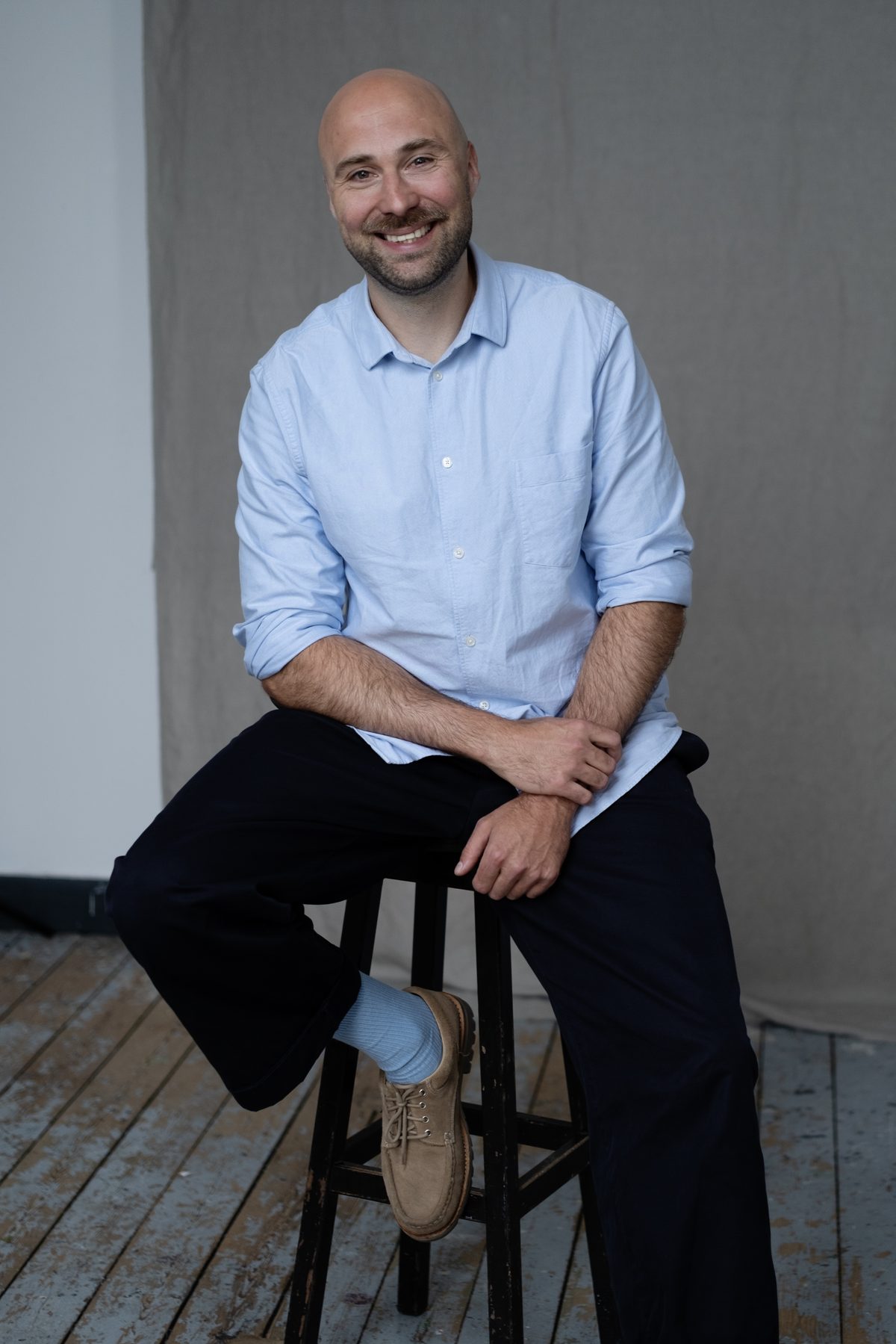
Nils Brosch — B2B SaaS Sales Trainer
How the engagement works

Leadership sets direction. I handle execution. You stay in control.

You set the direction

We agree the target KPIs upfront: win rate, discounting, pipeline quality, forecast accuracy. Everything is built backward from those.

I handle the execution

Baseline, coaching, manager development, group training. Embedded with your team for four to five months. No status meetings, just the work.

You get milestone visibility

Live KPI tracking and sign-offs at three milestones. You always know where it stands without chasing an update.

The engagement

Four phases across 4–5 months

The structure is consistent. The content is built entirely around what the baseline reveals and the KPIs agreed with the VP+ at the start.

Phase 1Baseline Assessment
Phase 2Training & Standards
Phase 3Coaching Trajectory
Phase 4Codification & Handover
Phase 1 Weeks 1–3

Baseline Assessment

Before anything is built, I map the real gaps — rep by rep, manager by manager. I start with a commercial maturity assessment to understand the company's processes, pipeline quality, and management structure. Then intensive call reviews (minimum 6 per rep), KPI analysis, and manager shadowing. After 2 to 3 weeks I present findings to the VP+ for sign-off, then hold individual sessions with each rep to share my assessment and agree their North Star coaching KPIs — creating explicit buy-in before coaching begins.

Rep assessment
  • Commercial maturity model — process, pipeline, people, playbook
  • Minimum 6 calls reviewed per rep on a standardised framework
  • KPI review: conversion rates, deal velocity, discounting
  • North Star KPI agreed individually with each rep
Manager assessment
  • Coaching cadence, inspection depth, enforcement assessed
  • Pipeline reviews, forecast calls, 1:1s shadowed
  • Forecasting accuracy reviewed against CRM data
  • Findings aligned with VP+ before plan is confirmed
Milestone 1 — VP+ sign-off on baseline findings
Phase 2 End of Month 1

Group Training — Setting the Standard

Before individual coaching can work, the team needs a shared language and a common quality bar. The first group training is built around the most commonly encountered issues from the baseline — every example comes from the team's own calls. A second training block follows 6 to 8 weeks later as new focus areas emerge from the ongoing coaching work.

What this establishes
  • Non-negotiable selling standards the whole team operates to
  • A shared language that makes 1:1 coaching and peer feedback consistent
  • A quality bar managers can inspect against in pipeline reviews
  • Live roleplay and feedback using the team's own calls — not generic examples
  • SETUP methodology — Spot, Explain, Fix, Use — applied across every session
Phase 3 Months 1–4

Individual & Group Coaching Trajectory

After the first training, the weekly rhythm begins — alternating between group training, 1:1 coaching, and group coaching sessions. Each rep works on one North Star KPI per month with structured homework between sessions. Managers are coached in parallel: high-touch shadowing and direct feedback in month one, moving toward independent execution by month three. By then, managers are running their own sessions using the same framework.

Rep coaching
  • One North Star KPI focus per rep per month
  • Weekly or bi-weekly 1:1 sessions (~30 min each)
  • Homework: call reviews, AI roleplays, live deal work
  • Group coaching sessions on shared focus areas
  • All sessions logged in Coachboard
Manager coaching
  • Weekly shadowing + direct feedback in month 1
  • Bi-weekly from month 2 as ownership transfers
  • Managers join rep sessions to learn the method
  • Standardised deal inspection checklist introduced
  • Pipeline review and forecast discipline reinforced
Milestone 2 — mid-term review with VP+
Phase 4 Months 4–5

Codification & Handover

The goal is a system that runs without external input after the engagement ends. By this point managers are coaching independently. The final phase documents everything built and hands it over so the work persists — and new hires ramp into the same standards from day one.

What gets documented
  • Sales playbook — standards, frameworks, non-negotiables
  • Manager coaching playbook — cadence, inspection checklist
  • Onboarding framework for new hires
  • Individual KPI baselines for continuity
The handover goal
  • Managers run structured coaching independently
  • VP+ has full visibility via Coachboard
  • New reps ramp into the system, not around it
  • Standards persist beyond the engagement
Milestone 3 — final review and handover sign-off with VP+
Is this for you?

This engagement is right for you if any of this sounds familiar

You can see the numbers but not the cause
Win rates are slipping, discounting is creeping up — but you are one step removed from execution and do not have the bandwidth to diagnose and fix it yourself.
You have done training before and it faded
Good sessions, strong feedback — and three months later the team was back to old habits. You need something that stays in the room after the workshop ends.
Your managers are not developing their reps
They know they should coach more, but pipeline reviews, forecasting, and escalations eat the week. Rep development is always the thing that falls to the bottom of the list.
You need outcomes, not activities
You want measurable movement on win rates, discounting, or pipeline quality — not a training day, a slide deck, and a hope that something changes.
What clients say

Results that speak for themselves

"
Nils has trained and coached our young Sales team super professionally in less than 4 months and helped them tremendously to become real Sales professionals.
IT
Igo Trampe
Co-founder · Trengo
"
The baseline analysis alone was worth it. We finally understood what was actually holding the team back — not what we assumed was holding them back.
MR
Michel Rasing
Sales Lead · Channable
"
What made the difference was that Nils worked with our managers in parallel. The coaching stuck because the managers were reinforcing the same standards in their 1:1s.
MW
Matthias Wolf
CCO / Co-Founder · Firstbird
FAQ

Frequently asked about this engagement

How is this different from a standalone training?
A training sets a standard. This engagement embeds one. The difference is what happens after the session — individual rep coaching, manager reinforcement, tracked homework, and a documented commercial system. Training is an event. This is a change in how the team operates.
Who does this engagement involve from our side?
The VP+, Head of Sales, or CRO sets the direction — target KPIs, context, and what success looks like. They are involved in the baseline sign-off and milestone check-ins, but not in the day-to-day. Reps commit approximately 60 to 90 minutes per week. Managers commit 60 to 90 minutes in the high-touch phase, reducing as they take ownership of the coaching cadence.
Can we start with just the baseline assessment?
Yes. The baseline concludes the first milestone, after which you can decide whether to proceed with the full trajectory, a lighter coaching engagement, or simply use the findings internally. There is no obligation beyond the first milestone.
What size of team does this work for?
The engagement works best for teams of four to fifteen individual contributors with one to three managers. Smaller teams benefit from full individual coaching intensity. Larger teams use a combination of individual and group coaching, with the cadence adjusted to maintain quality without diluting impact.
How do you measure success?
Against the KPIs agreed with the VP+ at the start. These are typically leading indicators — call quality scores, pipeline multithreading rates, discount frequency — that predict the lagging metrics like win rate and deal size. Coachboard tracks progress in real time, and each milestone check-in includes a before-and-after view of where each rep stands against their North Star KPI.
Is this remote or on-site?
Both. Most coaching sessions and manager work run remotely. On-site presence is typically 1 to 2 days per week depending on the engagement scope — particularly during the baseline phase and key training sessions. I work across the Netherlands, Belgium, Germany, Austria, and Switzerland.
Is sales training eligible for the Dutch SLIM budget?

Standard sales training on its own is usually not the strongest fit for the SLIM subsidy. The SLIM scheme is designed to stimulate learning and development in the workplace and to help organisations build a more future-proof learning culture.

That is why the Sales Excellence trajectory is a better match than a one-off training. It is not positioned as "sales training", but as a structured development programme that improves the way a commercial organisation learns, works, coaches, and performs over time.

The programme typically includes analysis of current sales capabilities, call and CRM reviews, manager enablement, structured coaching routines, improved sales methodology, and skill development across the team — aimed at lasting organisational improvement and the sustainable upskilling of employees, which is much closer to the intent of SLIM than a standalone workshop.

Final eligibility always depends on the specific application, company situation, timing, and subsidy criteria, so it should be validated with a subsidy advisor or the official SLIM application body.
Let's start with a conversation

Send me two calls. I'll show you where the gaps are and how to close them.

Chat with Nils